Due to the way we are permitted, Mac Tabby Cat Cafe is not able to take in cats ourselves. By law, we must work through rescues for our adoptable cats.
COMMUNITY, STRAY or FERAL OUTDOOR CAT?
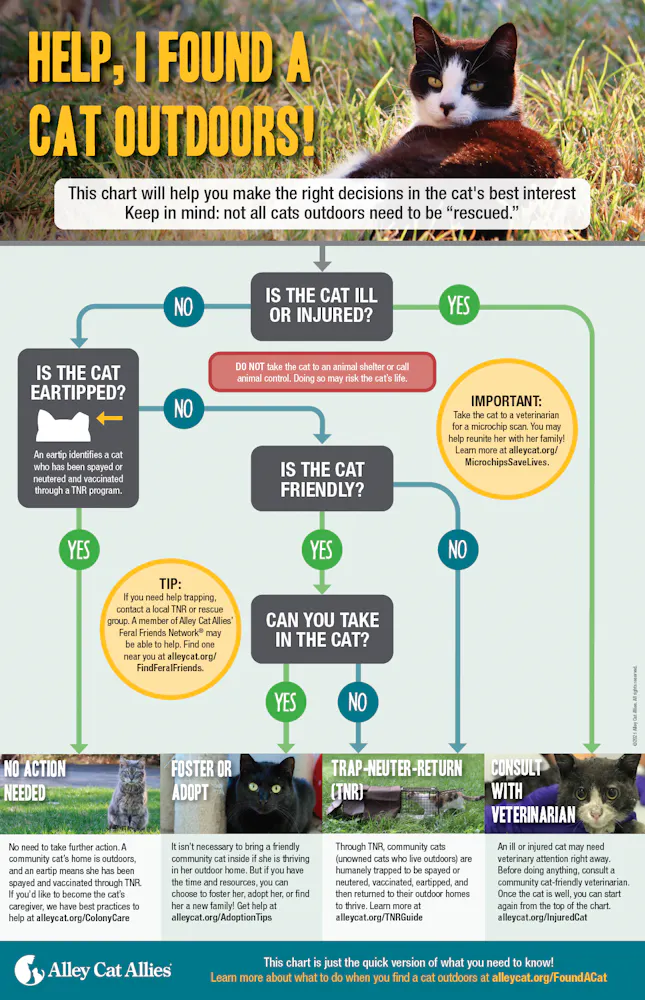
The first step is to always determine whether the cat is a stray, feral or community cat, or an outdoor pet cat with a home that’s just out on a little adventure.
- Stray cats are socialized to people but have been abandoned, lost or are otherwise living without a permanent home.
- Community cats is a general term for cats who live outdoors without a traditional owner. They may or may not be social. They may have a caretaker who provides basic medical needs and sometimes food.
- Feral cats (a type of community cat) are unsocialized to humans and typically prefer outdoor living; they often belong to a colony of cats, and feel most comfortable in that environment.
- Outdoor pet cats have a home and live an indoor/outdoor lifestyle, so they are not considered lost or abandoned.
It can be easy to assume the worst case scenario for the cat—that it has been abandoned and is vulnerable—but it’s important to stick to the facts and use the clues and information available to choose the best way to help. Sometimes, acting too soon can lead to unforeseen, negative consequences.
FRIENDLY CAT? CHECK FOR A CHIP!
The first step is to obtain a free scan of the cat’s microchip. Most animal shelters, PetCo / PetSmart or veterinary clinics can provide this service. Use the contact information linked to the chip to reach out to the cat’s owner and arrange a time and place for them to reconnect.
Also, check Nextdoor and any specific community social media pages to see if the owner has posted a lost cat notice and post one yourself. Even if the owner hasn’t posted anything, you may be able to gain more information about the cat from neighbors, such as where else the cat has been spotted, how far it travels and if it has been seen with other animals. It’s also a good idea to check your local municipal animal shelter for lost cat notices. Don’t forget going old school, knocking on doors and talking to your neighbors. Any information you can gather will help you decide what course of action to take next.
NO CHIP? DON'T PANIC:
The cat may still belong to a home. Circle back to those same websites you visited before and post the cat as lost. Additionally, post the cat’s information on flyers in the neighborhood where you found the cat as well as any neighborhood groups you might be in on Facebook and other social media sites. If you weren’t able to get ahold of the person connected to the cat’s microchip, posting the cat’s information in your neighborhood and online would also be your next steps. If someone contacts you about "their cat," please ask for proof of ownership!
OTHER WAYS TO HELP:
If there are outdoor cats on your property and you haven't had any luck finding an owner, please help them! One female cat can have 12-18 kittens per year which is a larger issue. Plus, you help the cat (and kittens) live a life of unnecessary suffering. You will be a hero! Become a part of the solution...
WHAT IS TNVR?
TNVR is the common acronym for programs that 'Trap', 'Neuter', 'Vaccinate' and 'Return' feral cats to their colonies outside. It is considered among the most effective and important ways in which communities may control and manage feral cat populations while limiting growth in the number of feral cats. You don't want that one cat outside your door becoming 18!
For TNVR tips, trick and to learn more, click HERE
COMMUNITY CAT RESOURCES BY COUNTY: click HERE
*TVNR Clinics, Injury/Illness Clinics and County Animal Services
Please use the Friends of Feral Felines resource link above to help with community cats in your TNVR process. Please, do not trap without having appointments scheduled, unless you know that you are using a clinic that offers walk-in services.
Friends of Feral Felines operates mainly in Mecklenburg County, however they have kindly included resources in some neighboring counties including Cabarrus, Gaston, Iredell, Lincoln, and Union in North Carolina, as well as Lancaster and York in South Carolina. Let them know you were referred by Friends of Feral Felines if you contact one of their resources!
WILLING TO FOSTER UNTIL PLACEMENT IS FOUND?
Click HERE for a list of local rescue organizations who may be able to assist you. This link allows you to search by city. We suggest reaching out to as many as possible in your area.
Let them know your story and why you are looking for help, any current photo(s), personality description, and any vet records you may now have. These are all great to add to your email and will be a big help and save time. Also, please keep in mind that 99% of rescues are run on donations, so if you're able to donate to the cat's future care for the help you may receive, please mention this!